GiliSoft Copy Protect User Guide

How to protect files from copying and unauthorized sharing

Create controlled GCP or EXE delivery packages for videos, PDFs, Office documents, PPT files, images, audio, web pages, and mixed folders. Configure viewer permissions, device binding, watermarking, printing, clipboard, and screenshot rules before distribution.

GCP and EXE outputClient and admin accessUSB and device bindingCopy and print control
Home > How to Use > Copy Protect

Choose the copy protection task you need

Understand the protected delivery structure

GCP Format

The standard protected package opened through the controlled GCP Reader workflow.

EXE Format

A self-contained protected executable for smaller deliveries, with a 4GB output limit.

Project ID

A publisher-facing name that helps identify a protected project and its access settings later.

Client and Admin

Client rules control recipient access; admin credentials retain publisher-level control over the package.

Keep project records and admin credentials with the publisher. Send recipients only the client access information required for their delivery.

Part 1: Create the protected package

1. Add files and choose the output type

Build the delivery from files, folders, web pages, PowerPoint content, fillable PDFs, documents, images, audio, or video.

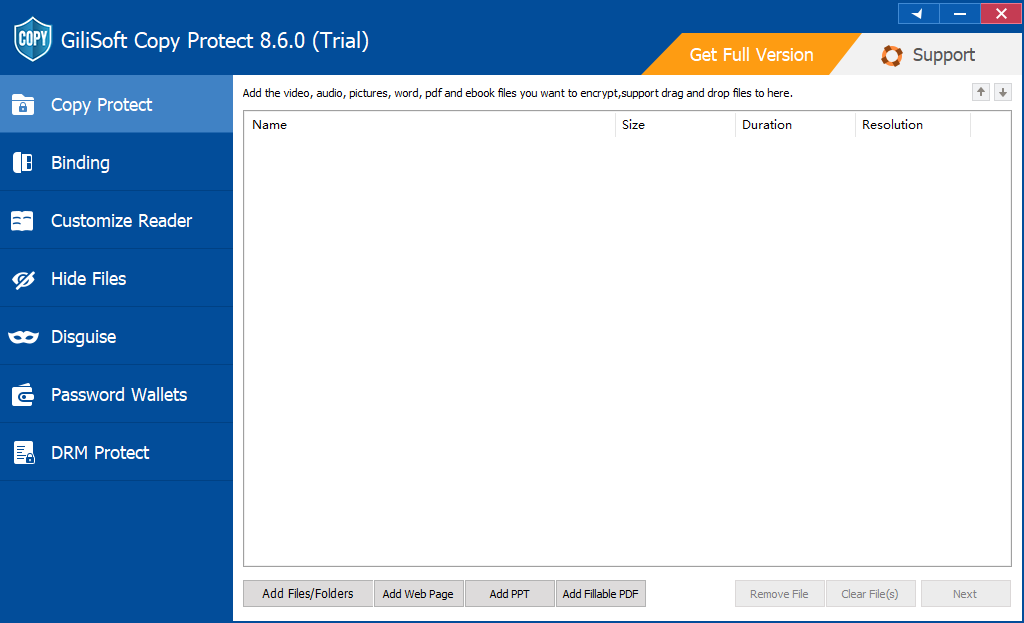
1Open GiliSoft Copy Protect and add the source content.
2Review the file list and remove anything that should not be delivered.
3Choose GCP Format for the standard protected package or EXE for self-contained output within the 4GB limit.
4Set the output location and continue to access rules.
2. Configure client access and restrictions

Define what ordinary recipients can do after opening the protected package.

1Create the client user name and password required for viewing.
2Choose whether copying, pasting, printing, screenshots, clipboard use, or virtual-machine playback should be restricted.
3Set expiry, opening limits, watermark text, or other recipient rules when needed.
4Save the client profile and test it as a recipient before delivery.

3. Keep a separate administrator profile

Use admin access for the publisher or content owner instead of giving every recipient the same level of control.

1Create administrator credentials that are different from client credentials.
2Reserve admin access for internal testing, package management, and support.
3Store the credentials with the Project ID in a secure publisher record.
4Do not include administrator credentials in ordinary delivery instructions.

Part 2: Bind protected content to the intended delivery path

Choose the binding rule before export

Binding keeps the package associated with the intended computer or physical delivery medium instead of behaving like an ordinary freely copied file.

1Select the binding option that matches the delivery method.
2Connect the destination device or media when the software requests it.
3Create the protected output and keep the original project settings.
4Test playback from the authorized destination before distribution.

Bind to a computer or device

Use device binding when a package should open only in the authorized device environment selected during preparation.

Controlled device access

Bind to a USB drive

Use USB binding for controlled removable-media delivery so copied package files do not behave like ordinary unbound source content.

Protected USB delivery

Bind to CD or DVD

Associate access with the intended optical media for offline training, archive, client, or licensed-content delivery.

Protected disc delivery

Keep delivery instructions simple

Tell recipients where the package is located, which client credentials to use, and whether the authorized USB device or disc must remain connected.

Fewer support questions

Part 3: Customize and test the recipient experience

Recipient opens package
Client password is entered
Binding is verified
Protected content opens

Customize the controlled GCP Reader

Prepare the reader interface recipients use to view or play protected content.

1Open the Reader customization settings.
2Set the reader name, icon, branding, and visible instructions required by the project.
3Keep the interface clear so recipients understand how to open the protected package.
4Run a final test with client credentials, restrictions, and binding enabled.

Supported content and permission controls

Content you can package

  • Video and audio files
  • PDF, Office, PPT, and fillable PDF documents
  • Images, web pages, individual files, and folders
  • Mixed delivery sets containing several content types

Recipient actions you can control

  • Copying, pasting, clipboard use, and saving content elsewhere
  • Printing and screenshot behavior
  • Opening limits, expiration, and visible watermark information
  • Playback in virtual machines or unauthorized environments

Optional tools for preparing local source material

Hide Files

Conceal sensitive local supporting files when source preparation also requires local privacy.

Disguise Folder

Make a local source folder less obvious before or after preparing the protected delivery.

Password Wallets

Organize access information used across repeated package and delivery tasks.

These tools are optional. They are not required to create a GCP or EXE protected package.

Why a protected package may not open as expected

Check package and credentials

  • Confirm the client password belongs to this package.
  • Verify the protected output was copied or downloaded completely.
  • For EXE output, confirm the package stayed within the supported 4GB limit.
  • Use the correct GCP Reader workflow for GCP packages.

Check restrictions and binding

  • Reconnect the authorized USB drive, disc, or destination device.
  • Check expiration, opening limits, and recipient permission settings.
  • Confirm client and admin credentials were not mixed up.
  • Retest the original protected output from the publisher's project.

Copy Protect FAQ

Should I choose GCP or EXE output?

Choose GCP for the standard protected-reader workflow. Choose EXE when a self-contained executable is preferred and the package is no larger than 4GB.

Are client and admin passwords the same?

They serve different roles. Client credentials are for recipients; administrator credentials should remain with the publisher.

Can I prevent printing and screenshots?

Client settings include controls for printing, copying, clipboard use, screenshots, and related reuse paths.

Can protected files be tied to a USB drive?

Yes. Binding options support controlled USB, external-device, computer, and CD/DVD delivery scenarios.

What is the Project ID used for?

It helps the publisher identify the correct protected project and its saved access settings during later management or support.

Do recipients receive the original source files?

The goal is to distribute protected output for controlled viewing instead of ordinary open source files.

More copy protection guides

Create protected delivery packages before content leaves your PC

Package mixed files with client permissions, admin control, device binding, watermarking, print restrictions, and controlled viewing.

View GiliSoft Copy Protect