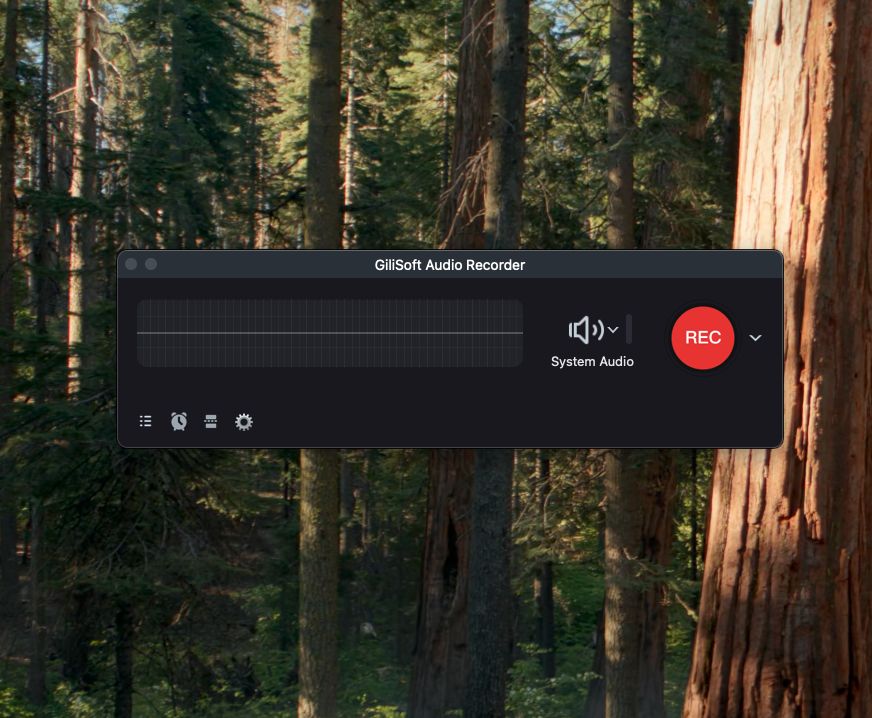
System Audio
Mac playback and app sound
Capture browser playback, media players, webinars, and other sound playing on the Mac without adding microphone input.

Record what plays on your Mac and add your voice when you need it. Capture lessons, interviews, webinars, and narration with clear source choices and practical controls for longer sessions.
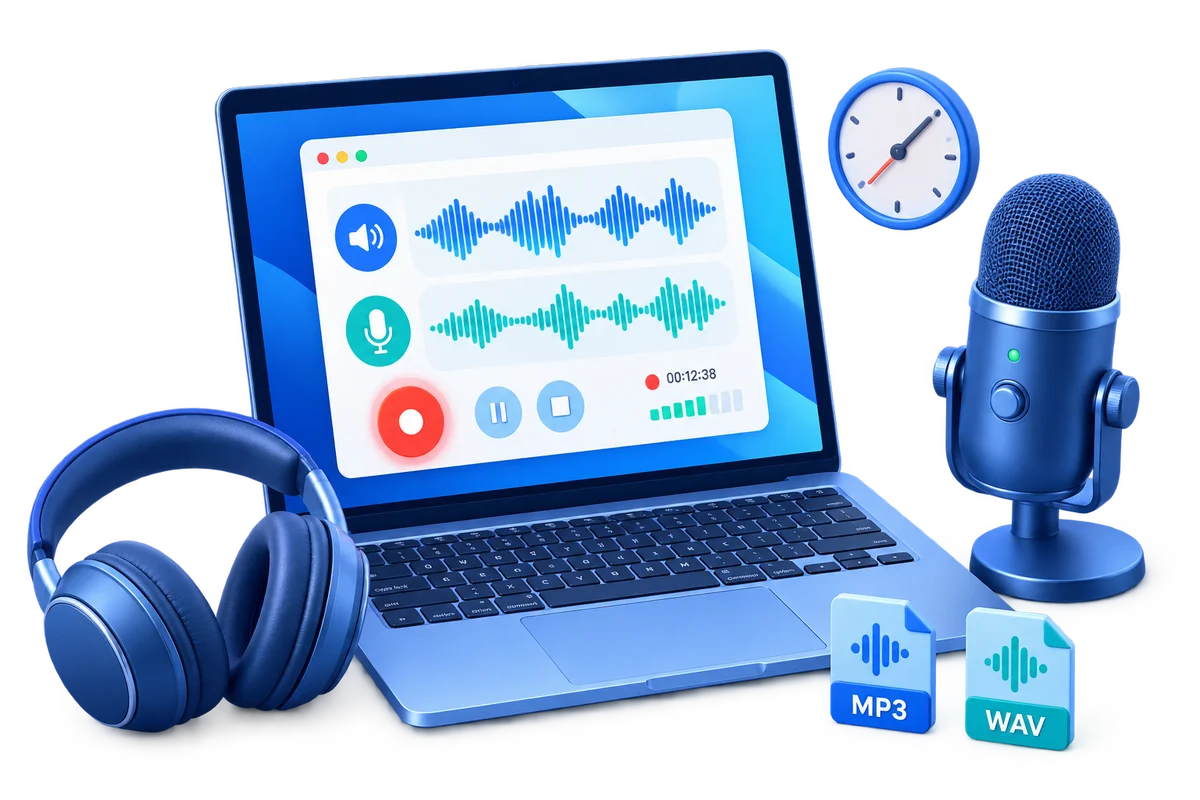
GiliSoft Audio Recorder for Mac captures internal playback, microphone speech, or both during one session. Record online lessons, webinar audio, interviews, radio programs, and tutorial narration with the source setup that matches your work.
Choose System Audio, Microphone, or System&Mic, then start immediately or use Countdown Record. Follow the recording timer and size display, pause and resume when needed, and control capture with separate Start/Stop and Pause/Resume keyboard shortcuts.
Use Auto Stop to end capture at a duration or file-size limit, or Auto Split to continue into manageable files. Choose MP3, M4A, or WAV and your Output folder in Settings, then replay and manage completed sessions from the File list.

Capture sound playing from browsers, media players, online lessons, webinars, and apps. Choose System Audio when you want the Mac's playback rather than microphone pickup.
Capture narration, voice notes, interviews, and spoken explanations. Select Microphone from the source menu and prepare the input for the session before pressing REC.
Choose System&Mic for lessons, demonstrations, commentary, and conversations that need both computer playback and your voice in one recording session.
Start immediately or use Countdown Record to delay capture. Auto Stop finishes the session at a selected recording duration or file-size limit, with a choice of completion action.
Use Auto Split to create a new file at a time or size threshold. Keep long lectures, interviews, and radio captures in manageable parts without ending the recording.
Control live capture with pause and stop buttons. Set separate Start/Stop and Pause/Resume shortcuts to manage the recording while staying with your main task.
Choose the recording format and Output folder in Settings. Save audio for convenient sharing, Apple audio workflows, editing, or an organized local archive.
Use the File list to review names, duration, size, and capture dates. Play the recording, open its saved location, and manage files after the session.

Recording internal audio on macOS became much easier for our training team, especially for webinars and online classes.
The preview-before-recording step helps us confirm the right Mac input before long podcast sessions.
Scheduled recording is useful for radio streams and live events where no one wants to start capture manually.
System audio and mic capture together gives us cleaner lesson recordings than using a room microphone.
Select the source beside REC before recording. Capture Mac playback, spoken input, or a combined session.
Mac playback and app sound
Capture browser playback, media players, webinars, and other sound playing on the Mac without adding microphone input.
Your voice or microphone source
Record narration, interviews, lectures, and voice notes using the microphone input selected on the Mac.
Mac playback plus spoken commentary
Capture both sources during one session. Use headphones and a short saved test to check voice clarity and playback balance.
Set the source and output, control the recording, and review the saved audio before using it in your next project.
Choose System Audio, Microphone, or System&Mic beside REC. Allow the macOS recording permissions requested for the chosen source.
Open Settings for the format and Output folder. Use Countdown Record, Auto Stop, or Auto Split when the session needs timed behavior.
Check a short sample, then start the full capture. Follow the timer and recording size; pause, resume, or stop with the panel controls or configured shortcuts.
Open the File list, replay the saved audio, and check its duration and location. Keep the original recording for your next edit or delivery copy.
Explore source selection, record-start options, live capture, automatic stop and split rules, output settings, shortcuts, and saved recordings.
Capture online lessons, webinars, demonstrations, and spoken explanations on Mac. Use System&Mic when the lesson needs both playback and narration.
Record microphone speech and reference audio for interviews, conversations, and podcast production. Pause and resume when the session needs a break.
Use countdown start, duration or size limits, and automatic splitting for radio programs, livestream audio, lectures, and other longer captures.
Prepare narration, voice notes, audio references, and commentary. Choose MP3, M4A, or WAV and keep completed sessions organized in the recording file list.
Yes. Choose System Audio to capture playback from your Mac, such as browser audio, media players, online lessons, and app sound. Choose Microphone when you want to record your voice or microphone input instead. The two source choices serve different recording tasks.
Yes. Choose System&Mic from the audio-source menu to capture computer playback and microphone input in the same session. Speak and play a short sample before the full recording, then listen to the saved result. Headphones help prevent speaker playback from entering the microphone again.
The menu beside REC provides Record Now, Countdown Record, and Auto-Stop Record choices. Countdown Record delays the start of capture. Auto Stop ends recording when the chosen recording duration or file-size limit is reached, with Only this time and Always choices for applying the rule.
Yes. Auto Split can create a new recording file when a chosen duration or file size is reached. Apply the setting for the current session or keep it enabled with Always. Auto Split continues capture in another file, while Auto Stop ends the recording.
GiliSoft Audio Recorder for Mac supports MP3, M4A, and WAV output. Open Settings to choose Audio format and use Output to select the save folder. The File list shows each recording's name, duration, size, and date and time, with controls for playback and opening the saved location.
Allow the recording permissions requested by the app. In System Settings, open Privacy & Security and check Microphone access for voice input and the relevant screen or system-audio recording permission for Mac playback. Permission names vary by macOS version. Reopen the recorder if prompted, confirm the selected source, and save a short test.
Yes. Settings includes separate Start/Stop Recording and Pause/Resume Recording shortcuts. Choose combinations that do not conflict with the application you are using. The live recording panel also provides pause and stop controls, an elapsed timer, and a recording-size display.
A trial download is available for macOS. The Mac edition requires its own $34.95 license and is licensed separately from the Windows edition. Use the Mac download on this page to install the macOS application.

Editors highlighted system sound and microphone capture for common macOS recording needs.
Coverage noted practical controls for scheduled recording, preview, monitoring, and long-session stability.

Reviewers praised clarity retention during export and dependable behavior for lectures, webinars, and streams.
Commentary emphasized straightforward controls for non-technical users who still need repeatable output.

Independent notes described the recorder as useful for podcasts, online classes, and voice documentation on Mac.
The strongest fit is routine recording where clean source capture matters more than full audio production.
Choose the audio source, set the timing and file controls, and save recordings ready for replay, sharing, or editing.


Enter your email address to get our latest newsletter