

DLL Repair Tool for Windows
A DLL or runtime message can come from Windows, Visual C++, .NET, a game launcher, or the application itself. Repairing the wrong layer wastes time and may introduce a second problem.
Quick answer
Identify whether a missing DLL belongs to Windows, a runtime, or one application before repairing it. Make one recoverable change at a time, restart when required, and repeat the exact action that exposed the problem.
Identify the Component Behind the Error
| Check | What to confirm | Decision |
|---|---|---|
| Error owner | Windows component, runtime, launcher, or application | Record the baseline before changing Windows. |
| Evidence | Exact filename, code, event, and recent change | Choose the narrowest supported action. |
| Trusted repair | Official installer, Windows repair, or matching Total Repair category | Retest and keep a rollback path. |
Prepare a Safe Recovery Path
- Back up important files
Keep irreplaceable documents and media on a separate drive or trusted backup destination.
- Record the symptom
Save the exact error, affected action, time, and recent software or Windows change.
- Create a restore point
Turn on System Protection and create a clearly named restore point when Windows is stable enough.
- Close active work
Exit documents, installers, games, and other applications before cleanup or repair.
Use GiliSoft Total Repair for the Matching Task
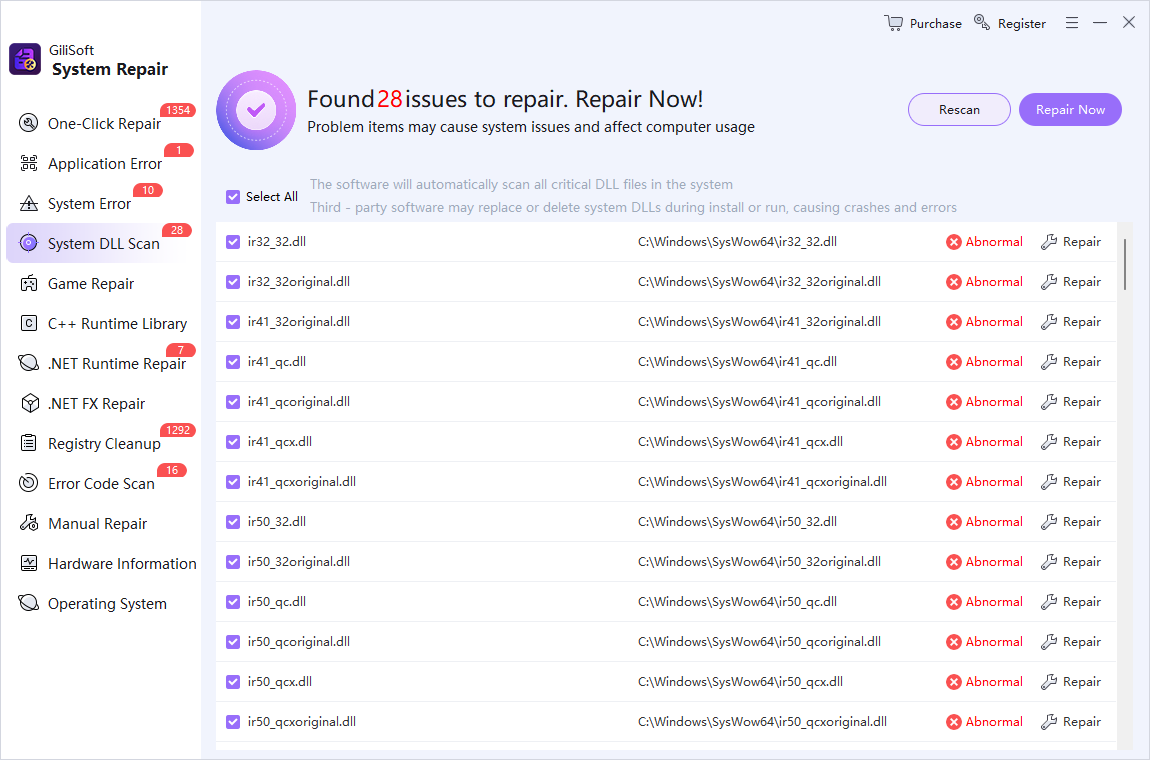
The screenshot below shows the real Total Repair module associated with this workflow. Scan first and review the result before applying changes.
- Capture the exact message
Record the DLL name, runtime version, application, and when the failure appears.
- Repair the application first
Use its official repair or reinstall option when the file belongs to that application.
- Check the required runtime
Repair the supported Visual C++ or .NET component instead of replacing one file blindly.
- Scan the matching category
In Total Repair, open Application Error, System DLL, .NET, C++ Runtime, or Game Repair.
- Restart and verify
Launch the same application and confirm the original error no longer appears.
Verify the Result Instead of Trusting the Completion Message
- Restart when required
Allow Windows, services, installers, and pending file changes to reload cleanly.
- Repeat the original action
Open the same program, command, file, menu, or workload that previously failed.
- Check for side effects
Verify startup, file associations, network access, installed applications, and important data.
- Compare with the baseline
Confirm the error, free space, responsiveness, or setting actually changed.
- Keep or reverse the change
Use the restore point, backup, or recorded setting if the result is worse.
When to Use Windows Recovery or Specialist Help
Move beyond routine cleanup when Windows cannot start reliably, DISM and SFC continue to fail, a drive reports health errors, files are encrypted without a recovery key, or malware may be active. Preserve logs and backups before using Reset, repair installation, or hardware service.
Total Repair is a maintenance and diagnostic workspace; it is not a replacement for a verified backup, security incident response, or physical hardware repair.
DLL Repair Tool for Windows FAQ
Can GiliSoft Total Repair fix every dll repair tool for windows problem?
No. It can scan and organize supported cleanup, repair, optimization, and file-tool tasks, but hardware failure, malware, unsupported software, and severe Windows damage require the appropriate specialist or Microsoft recovery path.
Should I create a restore point first?
Create one before registry, system, driver, startup, or broad repair changes when System Protection is available. Keep a separate backup of important personal files.
Should I apply every detected result?
No. Review the category, path, owner, size, and relationship to the symptom. Apply the narrowest relevant change and test before continuing.
When should I stop troubleshooting?
Stop if the drive shows health errors, Windows cannot boot reliably, the PC may be infected, encryption recovery is involved, or the same repair fails repeatedly without new evidence.