
How to Encrypt a File on Windows
File encryption is the right task when confidentiality must travel with a selected copy rather than depending only on access controls on one PC. File Lock Pro can create protected GFL or EXE output; test the format on the intended Windows environment before sharing or removing any source.
Quick answer
Start File Lock Pro and choose the file-encryption workspace. Back up the target first, apply the narrowest useful rule, and test both authorized access and the action that should be blocked.
Choose the Right File Protection Method
| Situation | Recommended approach | Check carefully |
|---|---|---|
| Protect a file stored or transferred as a separate package | Create encrypted GFL or EXE output | Password recovery and recipient compatibility |
| Restrict ordinary access on one managed PC | Lock the original file | Administrative and offline access |
| Allow reading but block edits | Use Protect | Applications that need write access |
| Protect an entire lost device | Use full-volume encryption | Recovery key and boot recovery |
Step-by-Step Workflow
- Keep the source and define the recipient workflow
Back up the original, decide who must decrypt it, and choose a secure channel for sharing the password separately.
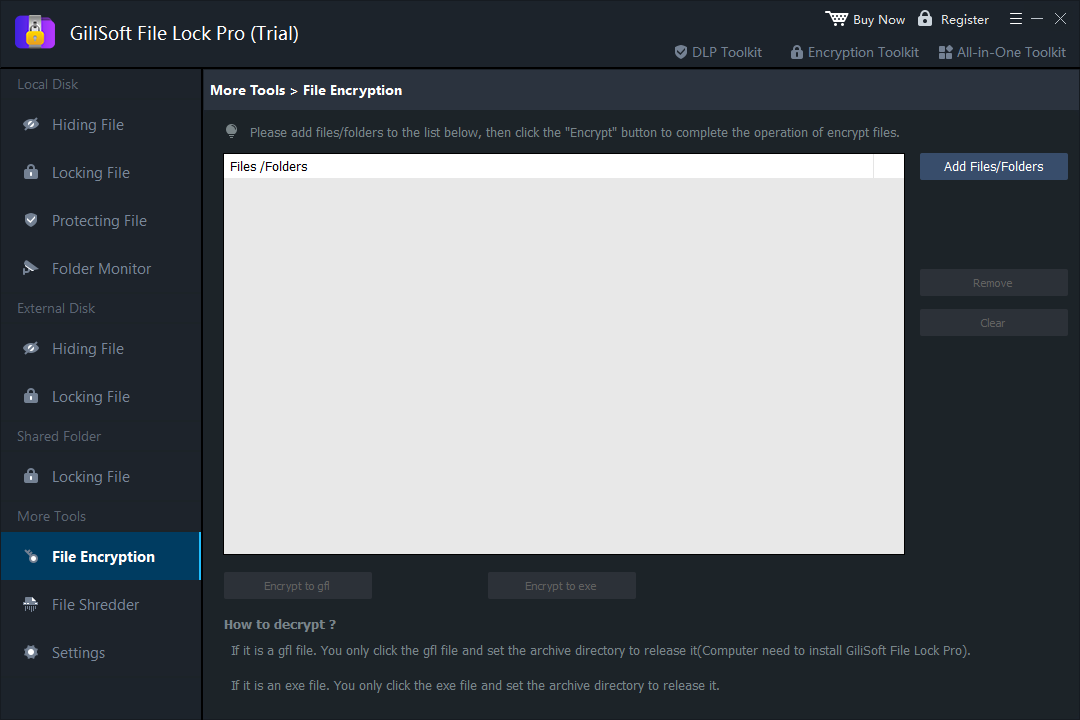
- Open More Tools and File Encryption
Start File Lock Pro and choose the file-encryption workspace.
- Add the exact files and choose output type
Select Encrypt to GFL for File Lock Pro output or Encrypt to EXE for supported executable delivery.
- Set a strong unique password and create the output
Confirm the destination does not overwrite the only source and record recovery information securely.
- Decrypt and compare a test copy
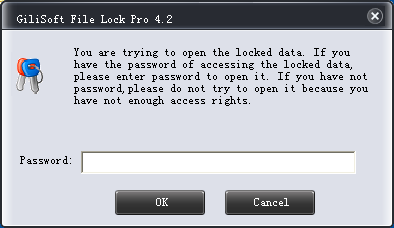
Open the finished output in the intended Windows environment, verify the password, and compare the recovered file before distribution.
See the File Lock Pro user guide for every workspace, password recovery, and related protection task.
GiliSoft File Lock Pro Interface
These product screenshots connect the workflow to the relevant local Windows controls.
Review the Protection Boundary
- Keep a verified backup before applying broad access or write restrictions.
- Use a standard user account to test both the permitted workflow and the blocked action.
- Protect the administration password and document how authorized recovery works.
- Keep Windows Security enabled and use encryption when offline data exposure is in scope.
Frequently Asked Questions
What is the difference between GFL and EXE output?
GFL is File Lock Pro encrypted output. EXE packages are intended for supported Windows executable delivery. Test the chosen format on the destination PC.
Is locking a file the same as encryption?
No. Locking controls access in the protected environment; encryption protects the contents of the created output.
Should I email the password with the encrypted file?
Use a separate approved channel so the package and password are not exposed together.
Can I delete the source immediately?
Keep a verified backup until encryption, transfer, decryption, and file integrity have all been tested.