
MKV Cutter for Windows: Cut MKV Without Losing Required Tracks
An MKV file can contain video, several audio languages, subtitle streams, chapters, cover art, font attachments, and color or HDR metadata. A successful cut must preserve the streams the viewer needs, place both boundaries correctly, and produce an output that still plays with the intended picture, sound, captions, and timing.
Quick answer
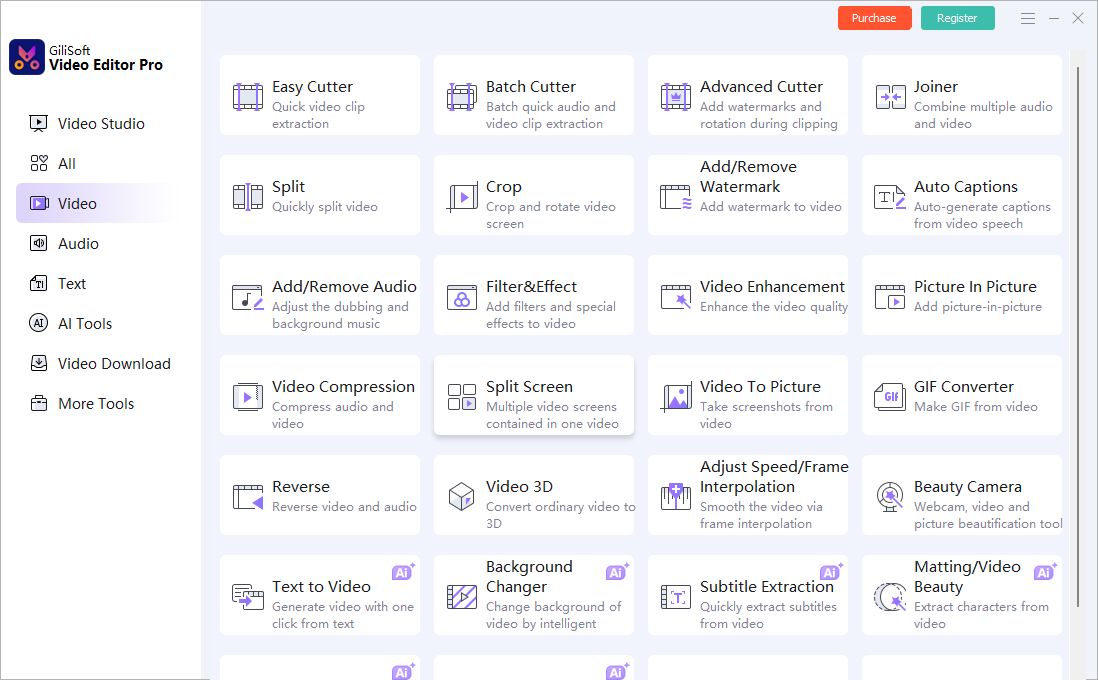
Use Easy Cutter in GiliSoft Video Editor Pro when one MKV file needs a quick extraction. Use Batch Cutter for several files, or Advanced Cutter when the cut also needs cropping, subtitles, watermarks, rotation, or effects. Before exporting, inspect every required audio and subtitle track. A fast no-re-encode cut can be constrained by keyframes; use a new export when exact boundaries matter.
Inspect the MKV tracks before cutting
| MKV element | What can go wrong | What to verify |
|---|---|---|
| Video stream | Unexpected codec, resolution, frame rate, color, or HDR change | Picture quality, motion, aspect ratio, and color after export |
| Audio tracks | The required language, commentary, or surround track is omitted | Track count, language, channel layout, and synchronization |
| Subtitle tracks | Soft subtitles or forced captions disappear | Required languages and subtitle timing |
| Chapters | Chapter markers are removed or no longer match the shortened duration | Whether chapters are still needed in the output |
| Attachments | Fonts, cover art, or other embedded files are not copied | Subtitle rendering and attached resources |
| Timestamps | Audio drift, incorrect duration, or seeking problems | Both boundaries, total duration, and playback outside the editor |
Choose the right GiliSoft cutter
| Tool | Best for | Use it when |
|---|---|---|
| Easy Cutter | One quick MKV extraction | You need a clear start and end point without a larger editing project |
| Batch Cutter | Several MKV files | Multiple sources need repeated cutting in one session |
| Advanced Cutter | Cutting plus visual changes | The clip also needs cropping, rotation, subtitles, watermarks, filters, or other adjustments |
| Video Studio | Complex multitrack editing | The project needs layered video, multiple audio tracks, titles, overlays, or detailed transitions |
How to cut an MKV file on Windows
- Preserve and inspect the source
Keep the original MKV unchanged. Play it, identify the required audio and subtitle languages, and note any chapters, attachments, HDR, or unusual playback behavior.
- Choose Easy, Batch, or Advanced Cutter
Open GiliSoft Video Editor Pro, select Video, and choose the cutter that matches the number of files and editing complexity.
- Add the MKV file and mark the range
Set the beginning and ending of the section to keep or remove. Preview several seconds around both boundaries.
- Check the required tracks
Confirm the intended audio, subtitles, and other important streams before export. Do not rely on the MKV extension alone.
- Choose stream copy or a new export
Use a compatible fast-cut workflow when approximate keyframe boundaries are acceptable. Choose a frame-accurate export when the exact first or last frame matters.
- Verify the finished MKV
Check both cut points, audio sync, subtitles, chapters, duration, color, HDR behavior, seeking, and playback in another application.
Lossless MKV cutting versus frame-accurate cutting
A stream-copy cutter preserves encoded video and audio instead of rendering every frame again. It is fast and can avoid generational quality loss, but compressed video normally depends on keyframes for clean decoding. The selected start may therefore move to a nearby keyframe.
A frame-accurate workflow decodes and re-encodes at least the affected area so the clip can begin or end at the intended frame. It takes longer and creates newly encoded data, but it is more reliable when exact dialogue, action, or subtitle timing matters.
Preserve subtitles, audio, chapters, and HDR deliberately
- Audio: confirm the required language and channel layout in the exported clip.
- Subtitles: test both soft subtitles and forced captions; check their timing after the cut.
- Chapters: remove obsolete chapter points or rebuild them for the shortened duration when needed.
- Attachments: verify embedded fonts when styled subtitles depend on them.
- HDR and color: confirm color metadata and appearance on an appropriate display.
- Output container: keep MKV when multiple tracks and Matroska-specific features matter; choose another format only when the destination requires it.
Fix common MKV cutting problems
The cut begins too early or too late
The fast-cut workflow probably selected a nearby keyframe. Use a frame-accurate export or adjust the boundary and verify the output.
An audio or subtitle track is missing
Return to the source and inspect every stream. Select the required languages and verify the exported track list before deleting working files.
Subtitles are out of sync
The subtitle timestamps may still refer to the original timeline. Use an export workflow that retimes the selected section and check the beginning and ending captions.
The first frames are black or frozen
The clip may begin without the reference frames required for decoding. Re-encode around the boundary or move the cut to a clean point.
HDR video looks flat or washed out
Check whether the output retained the required color primaries, transfer information, mastering metadata, and codec support. Test the finished file on an HDR-capable player and display.
MKV cutter FAQ
Can I cut an MKV file without losing quality?
Sometimes. Stream-copy cutting can preserve the encoded streams, but exact cut points may be limited by keyframes. Frame-accurate boundaries often require partial or full re-encoding.
How do I keep MKV audio and subtitle tracks after cutting?
Inspect the source tracks before editing, select every required audio and subtitle stream, and verify them in the exported file. Do not assume all tracks, chapters, or attachments are preserved automatically.
Why does an MKV cut start earlier or later than selected?
Compressed video commonly starts clean decoding at keyframes. A stream-copy cutter may move the boundary to a nearby keyframe, while a frame-accurate export decodes and re-encodes the affected area.
Can MKV chapters, fonts, attachments, and HDR metadata be lost?
Yes. Different editing and export workflows preserve different Matroska elements. Check chapters, subtitle fonts or attachments, color information, and HDR metadata in the finished file.
Which GiliSoft cutter should I use for MKV?
Use Easy Cutter for one quick clip, Batch Cutter for several MKV files, Advanced Cutter when trimming also needs cropping, subtitles, watermarks, or effects, and Video Studio only for complex multitrack editing.