
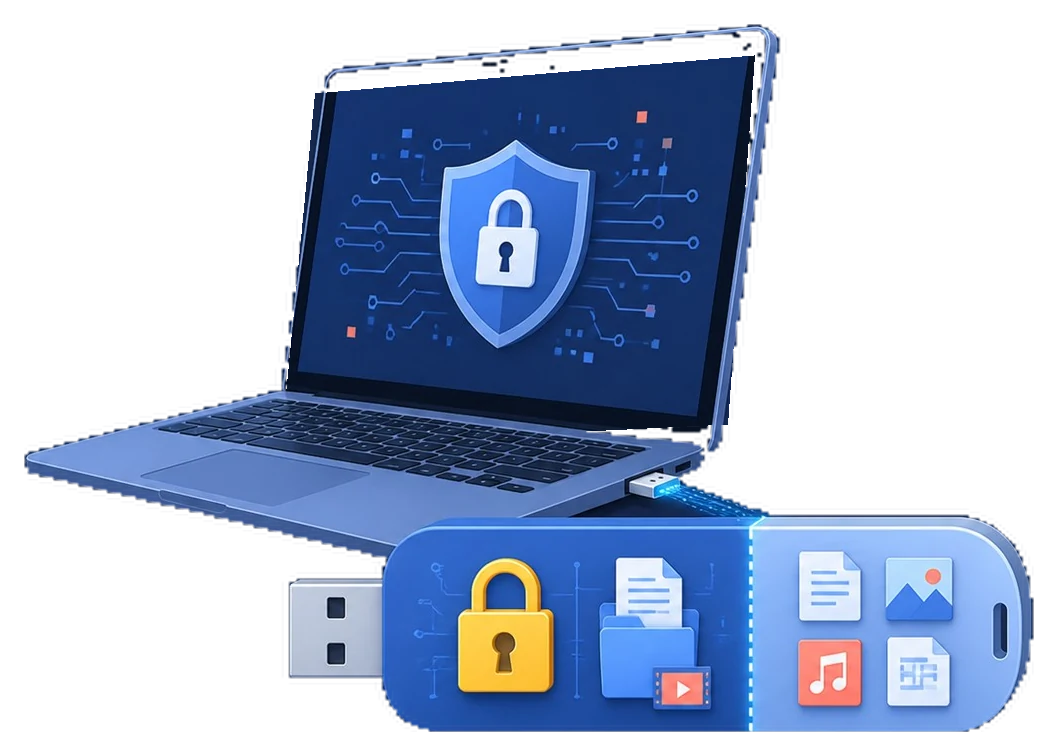
When a BitLocker alternative makes sense
Start with the data, devices, and people involved. A clear boundary makes the security setting easier to test and maintain.
Step-by-step workflow
Check whether BitLocker fits the environment
Review the Windows edition, device ownership, recovery requirements, and whether the drive will be opened on managed PCs.
Identify portability constraints
Consider how recipients unlock the drive, whether they have administrator support, and whether a dedicated workflow is easier to repeat.
Back up the source files
Keep an independent backup before encryption, conversion, or reformatting.
Test the alternative with a spare drive
Verify password entry, reconnect behavior, file access, and recovery on the computers that matter.
Use a focused USB encryption workflow
GiliSoft USB Stick Encryption is a practical option when the priority is straightforward password protection for removable storage.
Make the policy easier to manage
Keep recovery separate
Store passwords, recovery keys, and backup information away from the protected device or image.
Test before rollout
Use a non-critical device and verify both the permitted path and the blocked path before applying the rule broadly.
Review exceptions
Give temporary approvals an owner and review date so old exceptions do not become permanent access.
Common problems to check
- Confirm the Windows edition and administrator permissions required by the selected control.
- Test the exact USB device, file system, or target PC instead of relying on a similar model.
- Keep an independent backup before encrypting, blocking, formatting, or creating an image.
- Do not store passwords or recovery keys beside the protected media.
Frequently Asked Questions
Is a BitLocker alternative automatically more secure?
No. Security depends on the encryption method, password, recovery process, device handling, and operational controls.
Why might a dedicated USB tool be easier?
It can offer a focused workflow for removable drives without asking users to navigate broader Windows administration settings.
Can I move an encrypted USB drive between PCs?
Check the compatibility of the selected method and test it on the target PCs before using it for important transfers.
Should I keep BitLocker recovery keys?
Yes. Never start removable-drive encryption without a documented, separate recovery path.