
Edit Training Videos on Windows
A training edit should remove delay without removing context. Organize the lesson by learner objective, keep interface steps readable, and preserve enough time for viewers to follow each action.
Quick answer
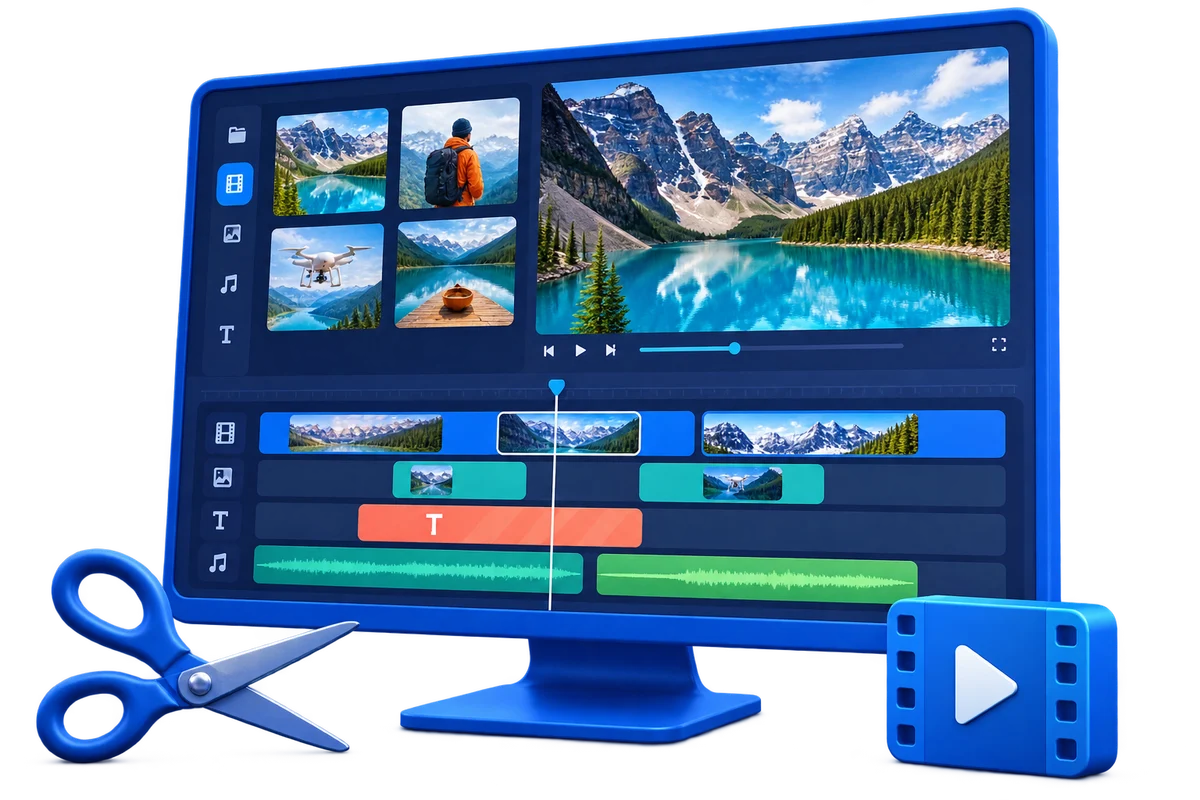
Use GiliSoft Video Editor Pro to arrange authorized screen recordings, narration, titles, callouts, and music on a multitrack timeline. Edit one module at a time, add navigation cues, and export a review copy before the final LMS version.
Confirm Rights Before Editing
- Use your own video or material whose owner and platform permit downloading, modification, and intended distribution.
- Keep license, consent, attribution, and source records with the project.
- Do not remove ownership marks, required attribution, access controls, or evidence from material you do not control.
Match the Goal to the Workflow
| Situation | Recommended action | Review checkpoint |
|---|---|---|
| Software walkthrough | Keep cursor actions and interface labels readable | Every click has enough context and screen time |
| Narrated lesson | Edit speech first, then align visuals | Narration and demonstrated action remain synchronized |
| Long training course | Split into goal-based modules | File names, titles, and sequence match the curriculum |
Step-by-Step Workflow
- Define the learning outcome
Write one observable learner task for the module and remove material that does not support it.
- Organize the authorized sources
Label screen recordings, narration, slides, and approved branding before importing them.
- Build the lesson timeline
Place primary footage first, then add narration, text, callouts, overlays, and transitions only where they clarify the task.
- Review pacing and readability
Pause long enough for menus, settings, warnings, and important text; check captions when used.
- Export a review and delivery copy
Collect subject-matter feedback, then export to the resolution and format required by the LMS or delivery platform.
Verify the Export
- Play the beginning, middle, and ending outside the editor.
- Check timing, aspect ratio, text, overlays, audio sync, and destination compatibility.
- Keep the untouched source and clearly label the approved export.
Know the Limits
Source compression, motion, missing background detail, poor audio, or low resolution can limit the result. Upscaling does not recreate true source detail, and editing tools do not grant permission to copy, modify, or distribute protected material.
Frequently Asked Questions
Can I edit or convert any video I download?
No. Downloading, editing, and redistributing may require separate permissions. Use your own or explicitly authorized material.
Should I overwrite the downloaded source?
No. Keep an untouched source and export a new version so the workflow can be corrected or repeated.
Why should I export a short test?
It reveals codec, quality, timing, overlay, and audio problems before a long render.
Does editing software grant reuse rights?
No. Software provides technical tools; ownership, licenses, consent, and platform rules determine permitted use.