
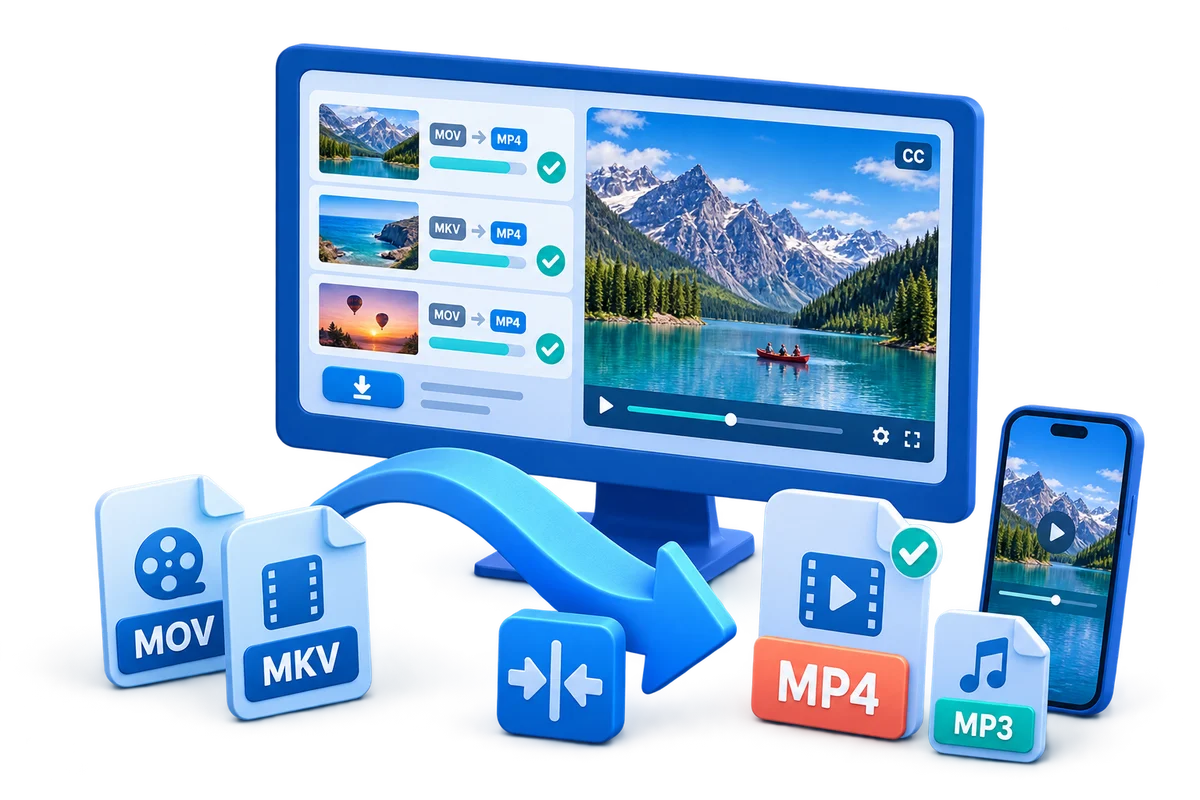
MKV to AVI Converter for Windows
MKV is a Matroska container that can hold multiple video, audio, subtitle, attachment, and chapter streams. Converting it for an older Windows application or hardware player that explicitly requires AVI requires more than selecting an extension.
Quick answer
Open the authorized MKV source in GiliSoft Video Converter, inspect the intended video track, language, commentary, subtitles, chapters, HDR, and channel layout, and choose AVI settings for the real destination. Convert a representative sample first, then keep the source and final delivery copy separately.
Match the Output to the Destination
| Goal | Recommended setting | Verification |
|---|---|---|
| Destination compatibility | Use the codec required by the destination; preserve frame rate and display aspect ratio instead of assuming any AVI will work. | Open the output in the exact legacy player and seek through the file. |
| Source has subtitles or extra tracks | Select only the streams that should survive the conversion | Required language, captions, chapters, and audio remain available |
| Source quality is limited | Avoid upscaling and excessive bitrate | The file is not larger without a visible benefit |
Step-by-Step Conversion Workflow
- Inspect the source before converting
Confirm permission and play the MKV file. Check the intended video track, language, commentary, subtitles, chapters, HDR, and channel layout.
- Define the destination requirement
Use the codec required by the destination; preserve frame rate and display aspect ratio instead of assuming any AVI will work. Record the expected player, device, service, or editing application.
- Add the file and select streams
In GiliSoft Video Converter, choose the intended video, audio, and subtitle tracks. Do not assume every embedded track is needed.
- Convert a representative sample
Include motion, speech, music, subtitles, scene changes, and the most difficult visual detail.
- Verify the complete output
Open the output in the exact legacy player and seek through the file. Check the beginning, middle, ending, duration, file size, and synchronization.
Protect Quality and Important Tracks
- Keep the authorized source unchanged and export a separate delivery copy.
- Avoid increasing resolution or bitrate when the source does not contain more detail.
- Check audio language, channels, subtitles, chapters, frame rate, aspect ratio, and color information that the destination requires.
Limits to Understand
A simple conversion can accidentally drop subtitles, chapters, alternate audio, attachments, HDR metadata, or surround channels. Use the codec required by the destination; preserve frame rate and display aspect ratio instead of assuming any AVI will work.
Frequently Asked Questions
Does changing a file extension convert the video?
No. A real conversion decodes the source streams and writes compatible output streams into the selected container.
Should I overwrite the source file?
No. Keep the source and export a new delivery copy so tracks, metadata, or quality can be recovered.
Why should I convert a short sample first?
It reveals wrong tracks, aspect ratio, interlacing, sync, subtitle, codec, and quality problems before a long batch.
Can conversion improve a low-quality source?
It can improve compatibility and sometimes reduce visible defects, but it cannot recreate detail that was never captured.