
MOV Cutter for Windows: Trim MOV and iPhone Videos
MOV is a container, not one fixed video format. A file may contain H.264, HEVC, ProRes, variable-frame-rate phone footage, rotation metadata, multiple audio tracks, or edit-quality color information. A reliable cut keeps the intended scene while preserving the properties the destination actually needs.
Quick answer
For one simple clip, open the MOV file in Easy Cutter, mark the start and end points, preview both boundaries, and export a new copy. Use Batch Cutter for several files, Advanced Cutter when visual changes are needed, and Video Studio only for complex multitrack editing.
Choose the right MOV cutter
| Goal | Recommended tool | Why it fits |
|---|---|---|
| Trim one MOV file | Easy Cutter | Set one or more clip ranges without building a full project |
| Cut several MOV files | Batch Cutter | Repeat the same focused workflow across multiple sources |
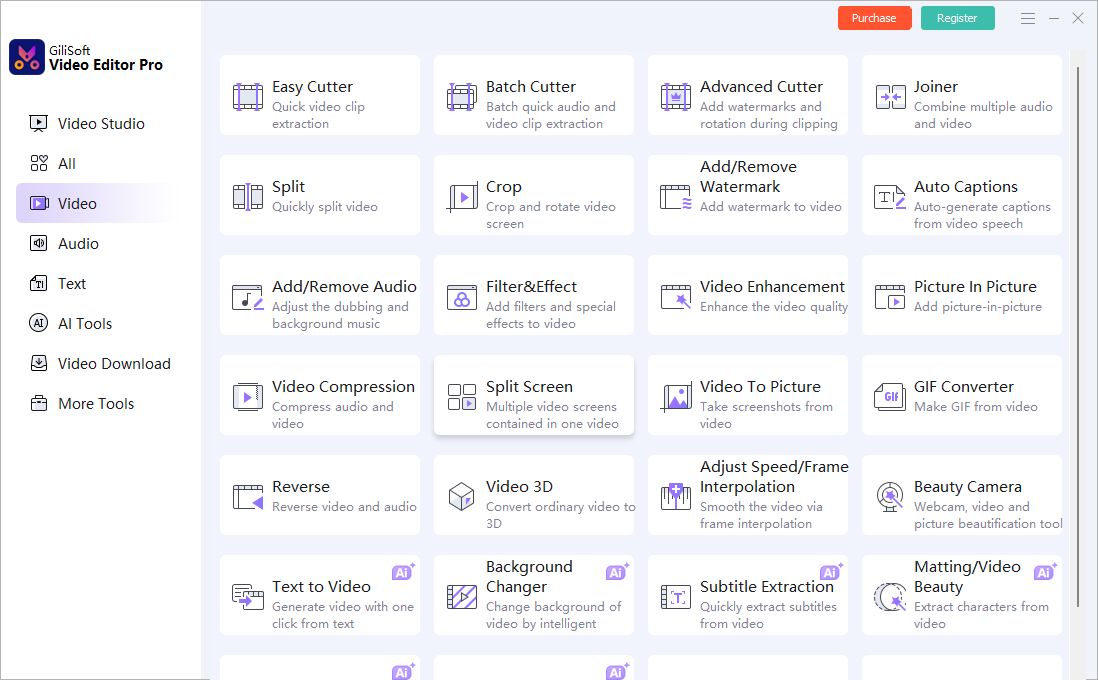
| Cut plus rotate, crop, or add a watermark | Advanced Cutter | Combine clip extraction with visual adjustments |
| Arrange multiple clips, overlays, and audio | Video Studio | Use the timeline when the job has become a multitrack edit |
How to cut a MOV file on Windows
-
Keep the original and inspect the MOV file
Play the source first. Check its orientation, dimensions, frame rate, audio, duration, HDR appearance, and whether it came from an iPhone, camera, screen recorder, or editing application.
-
Open the focused cutter
In GiliSoft Video Editor Pro, choose Easy Cutter for a single file. Select Batch Cutter for several independent files or Advanced Cutter when the clip also needs rotation, cropping, or another visual change.
-
Add the MOV file and mark the useful range
Move the start and end controls to the exact section you want to keep. For speech or music, listen across each boundary instead of judging only by the thumbnail.
-
Preview orientation, motion, and sync
Review the first and last seconds of the clip. Phone footage deserves an extra check for portrait orientation, variable frame rate, dropped frames, and audio drift.
-
Choose the output for its destination
Keep MOV when an editing workflow requires it. Choose a broadly compatible MP4 delivery copy only when the destination calls for it; changing the extension alone does not convert the codecs.
-
Verify the exported clip
Open the result outside the editor and check orientation, both cut points, audio sync, duration, color, and playback on the actual destination device or application.
Keep MOV quality, orientation, and timing
- Do not overwrite the source. MOV files from cameras and editors may contain metadata or high-quality streams that a delivery export does not retain.
- Respect rotation metadata. A portrait iPhone video can appear sideways if the export or player ignores the orientation tag.
- Watch variable frame rate. Phone and screen-recording footage can drift out of sync when a workflow assumes a constant frame rate.
- Match the destination. Preserve resolution, frame rate, audio channels, color information, and codec compatibility that the receiving app needs.
Understand keyframes and re-encoding
Compressed MOV video is normally organized around keyframes. A fast cut may begin at a nearby keyframe instead of the exact selected frame. Frame-accurate cutting can require re-encoding around the boundary, while effects, resizing, rotation changes, and codec conversion generally require a new encode.
Do not assume that a larger bitrate or resolution improves the source. ProRes, alpha-channel, high-bit-depth, HDR, and professional camera files also need an output selected for their real post-production requirements, not a generic web preset.
Fix common MOV cutting problems
The iPhone video is sideways after export
The source may store portrait orientation as metadata. Rotate the image explicitly when needed, then verify the exported file in another player.
The cut point moves or begins with a frozen frame
The chosen point may fall between keyframes. Use a frame-accurate export or move the boundary to a natural scene change when speed matters more than an exact frame.
Audio gradually moves out of sync
Check whether the phone or screen recording uses a variable frame rate. Export a short test using settings that normalize timing before processing a long file.
The file opens on one PC but not another
MOV identifies the container, not the video codec. Confirm whether the destination supports the actual H.264, HEVC, ProRes, or other stream inside it.
Frequently Asked Questions
How can I trim a MOV file on Windows?
Open the MOV file in Easy Cutter, set the start and end points, preview both boundaries, choose an output suitable for the destination, and export a separate copy.
Can I cut an iPhone MOV video without changing its orientation?
Yes, but preview the export because phone videos may rely on rotation metadata. Confirm that the result displays in the correct orientation outside the editor.
Why does a MOV cut start earlier or later than the selected frame?
Fast cuts can be limited by keyframe placement. A frame-accurate export may need to re-encode around the selected boundary.
Will cutting a MOV file reduce quality?
A compatible fast cut may avoid full re-encoding. Frame-accurate edits, effects, format changes, or incompatible codecs require encoding and should use settings appropriate for the source and destination.
Should I convert MOV to MP4 before cutting?
Not automatically. Cut the original MOV when it opens correctly. Convert only when the destination or codec compatibility requires an MP4 delivery copy.