
Which video DRM software is best?
Hosted browser playback, mobile apps, connected TVs, and large OTT catalogs create a different problem. Those deployments usually need encrypted streaming, a player integration, device-specific DRM systems, and a license service. VdoCipher, Castlabs DRMtoday, and BuyDRM KeyOS address those cloud and enterprise requirements, but they carry more integration and operating overhead than a Windows desktop publisher may need.
This comparison therefore does not declare one universal winner. It identifies the strongest fit for each delivery model, then shows why GiliSoft is the practical recommendation when the product is a protected downloadable video rather than a hosted stream.
How we evaluated video DRM software
We also considered whether a product is transparent about its real scope. A Windows protected package is not the same thing as browser multi-DRM, and a cloud license server is not automatically better for a small training publisher delivering files to known customers.
Best video DRM software compared
| Product | Best for | Delivery model | Standout controls | Setup level |
|---|---|---|---|---|
| Recommended for direct delivery GiliSoft Video DRM Protection | Training, paid courses, demos, and premium downloads | Protected delivery packages for online or offline handoff | Password generation, PC/USB binding, dynamic watermark, expiration, play count, blacklist, anti-capture | Low to moderate |
| VdoCipher | Course websites, LMS platforms, web and mobile streaming | Hosted encrypted streaming with integrated player and APIs | Widevine/FairPlay delivery, dynamic watermarking, analytics, SDK and LMS integration | Moderate |
| Castlabs DRMtoday | Enterprise OTT, live and VOD services | Cloud multi-DRM license delivery | Widevine, PlayReady, FairPlay, offline licenses, key rotation, global licensing APIs | High |
| BuyDRM KeyOS | Media companies building a custom multi-platform service | SaaS multi-DRM and key-management infrastructure | Multi-key service, encryption and packaging integration, policy and license management | High |
The four options in detail

1. GiliSoft Video DRM Protection
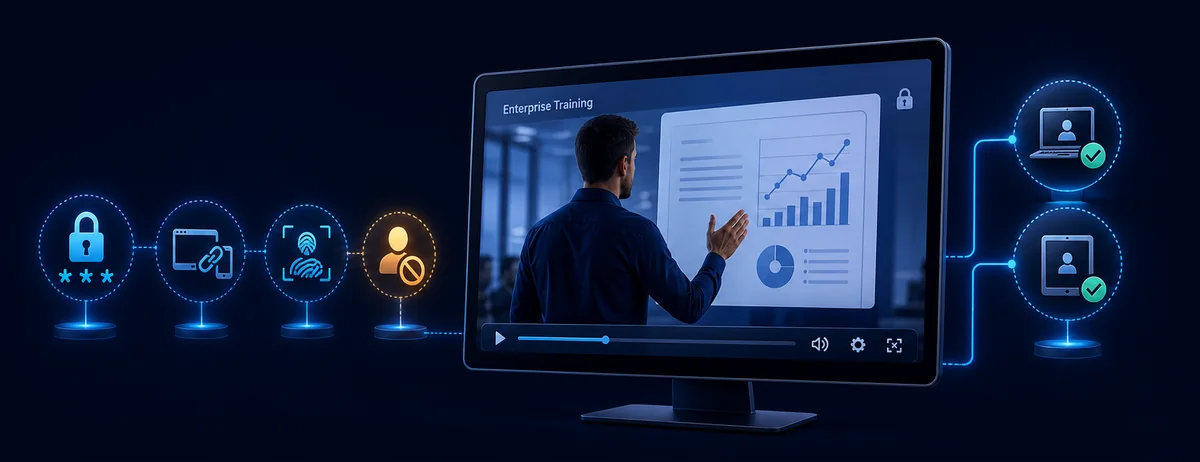
GiliSoft is designed for publishers who want to hand a learner, employee, reseller, or customer a protected video delivery package while retaining control over playback. A project can include videos and supporting files, then apply a playback password, bind access to an approved PC or USB drive, show viewer-specific watermarks, limit validity or play count, and blacklist compromised passwords.
- No separate streaming platform is required
- PC and USB device binding
- Dynamic watermark traceability
- Password expiration and play limits
- Blacklist access after delivery
- Anti-copy and anti-capture settings
Choose it when: viewers use Windows, the video is delivered as a download or offline package, and you need more control than ordinary file encryption.
Consider another architecture when: the primary experience must be adaptive browser streaming across phones, smart TVs, and many non-Windows devices.
2. VdoCipher
VdoCipher combines encrypted video hosting with playback integrations for web, mobile, WordPress, and learning systems. Its official product material emphasizes Widevine and FairPlay protection, dynamic viewer watermarking, APIs and SDKs, and piracy-oriented analytics. That makes it a more natural fit when learners stream inside a website or app rather than receive a protected downloadable package.
Choose it when: the course platform is hosted, the player must be embedded in an LMS or application, and your team accepts a recurring cloud service.
3. Castlabs DRMtoday
DRMtoday is a cloud licensing service for teams that already have, or plan to build, a professional media pipeline. Castlabs documents support for Widevine, PlayReady, and FairPlay, together with live and VOD licensing, offline persistent licenses, key rotation, APIs, and globally distributed license delivery. It is powerful, but it is infrastructure rather than a simple desktop packaging utility.
Choose it when: the project spans browsers, mobile devices, connected TVs, live channels, or a large VOD catalog and the organization has engineering resources for integration.
4. BuyDRM KeyOS
BuyDRM positions KeyOS as a SaaS multi-DRM platform covering encryption, key management, licensing, and integration with professional video delivery systems. It belongs on a shortlist when DRM is one component in a broader streaming architecture and the team wants an established service rather than operating license infrastructure from scratch.
Choose it when: engineering flexibility, multi-platform policy management, and integration with an existing packaging or streaming pipeline matter more than quick desktop deployment.
Choose by delivery model
Why GiliSoft is practical for offline delivery
A small training publisher should not need to become a streaming infrastructure company. With GiliSoft, the publisher prepares the protected project on Windows, issues playback access, and delivers the result through download, USB, or another controlled handoff method. The viewer receives the content, but playback still follows the rules chosen by the publisher.
- Package the actual deliverable.Add training videos, lessons, demos, or supporting documents to the protected project.
- Choose who may play it.Use a password and, where needed, bind playback to the viewer's PC or an authorized USB drive.
- Make misuse traceable.Add a dynamic watermark carrying viewer or machine information.
- Limit the access period.Apply expiration dates or allowed play counts to time-sensitive material.
- Respond after delivery.Blacklist a leaked or revoked playback password instead of rebuilding the entire project.
What video DRM can and cannot do
DRM can encrypt media, require licenses or passwords, bind playback to approved devices, restrict access windows, deter software capture, and make leaks attributable through watermarks. These controls substantially reduce casual copying and credential sharing.
No DRM product can physically stop someone from pointing a separate camera at a display. High-value deployments should combine access control, short validity periods, dynamic watermarking, clear viewer terms, and a response process for compromised accounts or passwords. Read the practical guide to reducing screen recording of protected videos.
Buyer checklist
- Define the viewer experience.Will the customer receive a protected downloadable package, stream in a browser, or watch across apps and televisions?
- List the controls that matter.Decide whether you need device binding, offline access, expiration, play counts, watermarking, revocation, or all of them.
- Check operating-system reach.Do not buy an enterprise multi-DRM service when direct protected delivery is all you need, or a streaming platform when the project requires a different managed viewing experience.
- Estimate integration effort.Account for player work, APIs, packaging, key management, cloud fees, and technical support.
- Run misuse tests.Test approved and unapproved devices, expired access, screenshots, recording tools, watermarks, and revocation before launch.
Frequently asked questions
What is the best video DRM software for protected downloads?
GiliSoft Video DRM Protection is the direct fit in this comparison. It is published from Windows and creates protected video packages for supported viewer platforms and supports passwords, PC or USB binding, watermarking, access limits, and blacklist revocation.
Which video DRM software is best for online courses?
For downloadable course packages, choose GiliSoft. It is published from Windows and its protected videos can be played across supported platforms. For hosted streaming inside a website, LMS, or mobile app, evaluate a service such as VdoCipher. The correct answer depends on whether the course is delivered as a file or streamed through a platform.
Is GiliSoft a cloud multi-DRM service?
No. It is a Windows desktop publishing product that creates protected packages for supported viewer platforms. This simpler model is an advantage for offline delivery, but it is different from an enterprise Widevine, PlayReady, and FairPlay license service.
Can video DRM stop screen recording?
It can deter common software capture routes and combine those controls with traceable watermarks, binding, expiration, and revocation. A separate physical camera remains outside software control.
What is the difference between DRM and encryption?
Encryption protects the media bytes. DRM adds playback policy: who may open the video, on which device, during what period, and whether access can be revoked or traced later.
Official sources and further reading
- Google for Developers: Widevine DRM overview
- W3C: Encrypted Media Extensions
- Microsoft Learn: PlayReady licenses and policies
- VdoCipher: DRM and encrypted video streaming
- Castlabs: DRMtoday multi-DRM service
- BuyDRM: KeyOS MultiKey service overview
- AWS: SPEKE for connecting encryptors and DRM key providers
Protect downloadable videos without building a streaming platform
Use playback passwords, PC or USB binding, dynamic watermarking, expiration, play limits, and blacklist revocation in one direct-delivery publishing tool.
View GiliSoft Video DRM Protection