
Use GiliSoft File Lock Pro when one active folder on a USB drive should be locked, hidden, or protected while other folders remain usable. Use encrypted output or a 7-Zip archive when the protected copy must travel between computers. Choose BitLocker To Go when the whole USB drive should require a password, or GiliSoft USB Encryption when one device should contain both a public area and a password-protected secure area.
First Decide What Locking the USB Folder Means
Folder locking, file encryption, and whole-drive encryption solve different problems. CISA distinguishes file encryption from removable-drive encryption because one protects selected content while the other protects the storage device as a whole.
Keep one working folder in place
The folder stays on the USB drive and remains easy to update, but unauthorized opening or changes should be blocked.
Carry a password-protected copy
The folder becomes an encrypted package that can be stored or opened on another compatible computer.
Protect everything if the USB is lost
The complete removable drive should stay unreadable until a password or recovery method unlocks it.
Keep public and private files together
Some USB space should remain open while sensitive files live inside a separate password-protected area.
Compare Five Ways to Protect a Folder on USB
| Method | Protection scope | Other-computer access | Best fit |
|---|---|---|---|
| File Lock Pro External Disk Recommended | Selected active folders, files, or drives | Use on managed Windows PCs where File Lock Pro is available | One working folder while the rest of the USB stays normal |
| Encrypted output or 7-Zip | A separate encrypted package | Yes, with the compatible opener and password | Portable backup, handoff, or archive copy |
| BitLocker To Go | The complete removable drive | Windows password or recovery-key unlock | Lost-device protection for the entire USB |
| GiliSoft USB Encryption | A secure area plus an optional public area | Password opens the mounted secure area | Public and private content on one USB drive |
| VeraCrypt container | A mountable encrypted container file | Requires VeraCrypt and the password or keyfile | Advanced reusable encrypted vaults |
Lock One USB Folder with GiliSoft File Lock Pro
This is the direct choice when the folder should stay active on the removable drive instead of being repackaged into an archive.
Connect the USB drive, open File Lock Pro, and enter the master password.
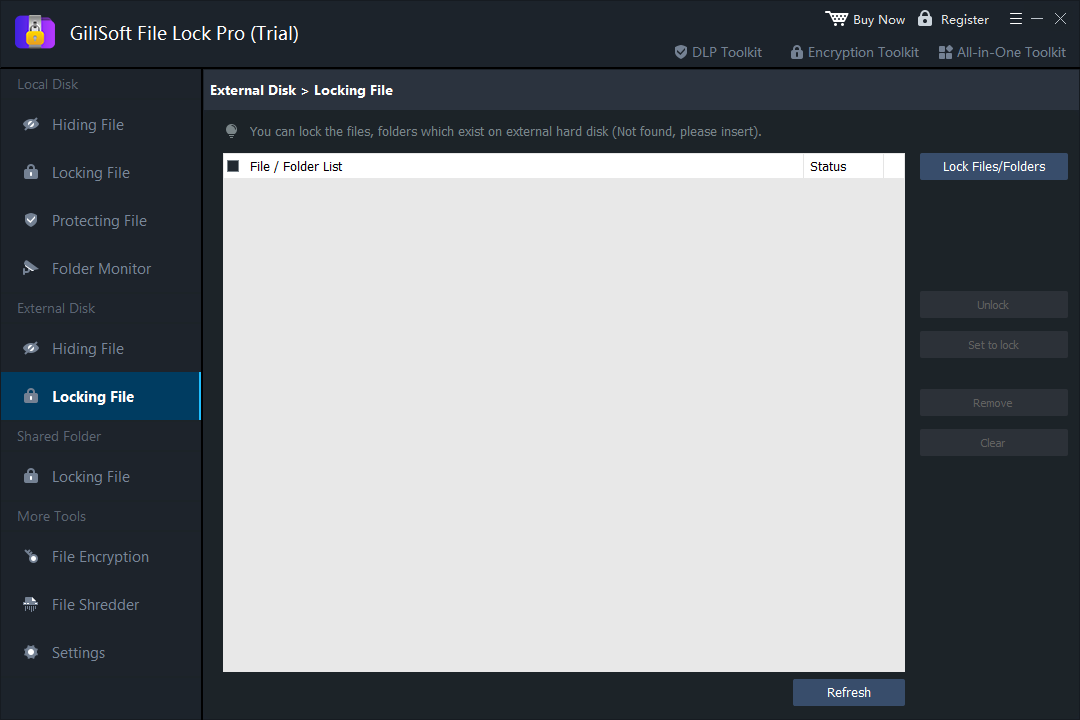
Under External Disk, choose Locking File. Use Hiding File instead when the folder should disappear from normal File Explorer views.
Select Lock Files/Folders, add the target folder from the USB drive, and apply the lock.
Test the folder from File Explorer. Confirm the intended files are restricted while unrelated USB folders still open normally.
Create a Portable Encrypted Folder Copy
Choose this path when the protected folder must travel between computers. It creates another protected object; it does not automatically secure the original source folder.
Option A: Create File Lock Pro encrypted output
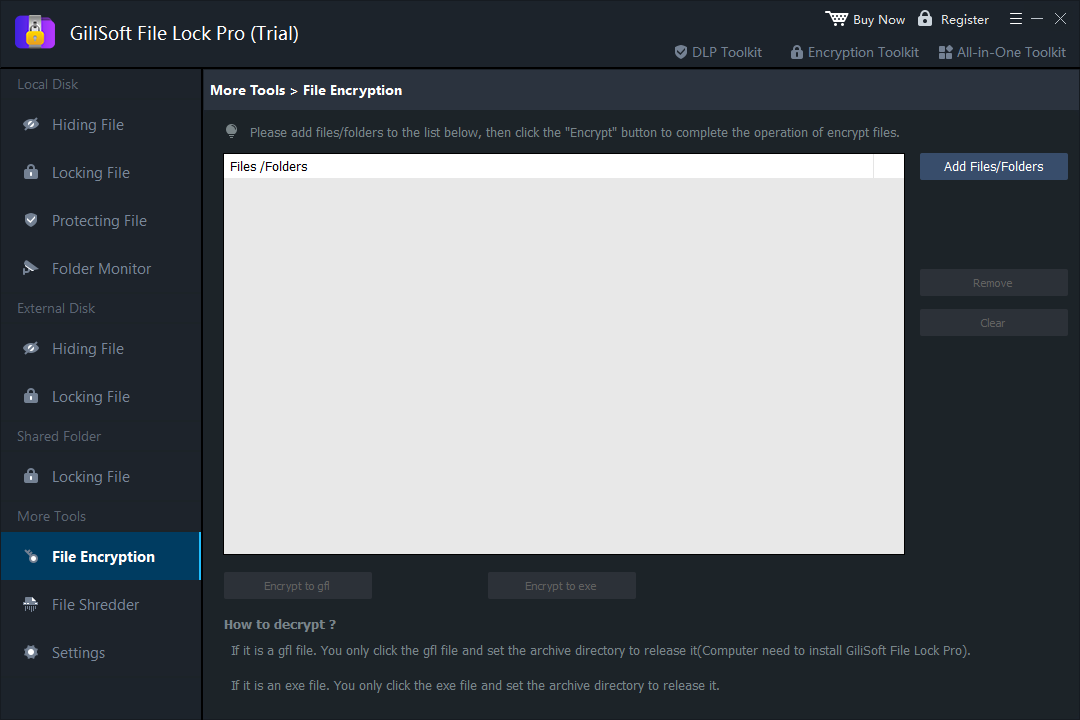
Open More Tools > File Encryption and add the folder contents.
Create the available GFL or EXE encrypted output and save it on the USB drive.
Open the result, confirm the password and recovery path, then decide whether the unprotected source should remain.
Option B: Create an AES-256 archive with 7-Zip
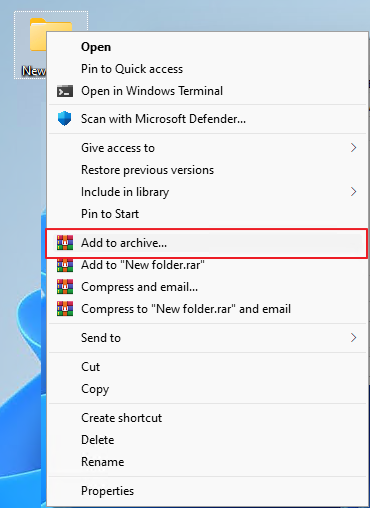
Right-click the folder, select 7-Zip > Add to archive, and choose the 7z format.
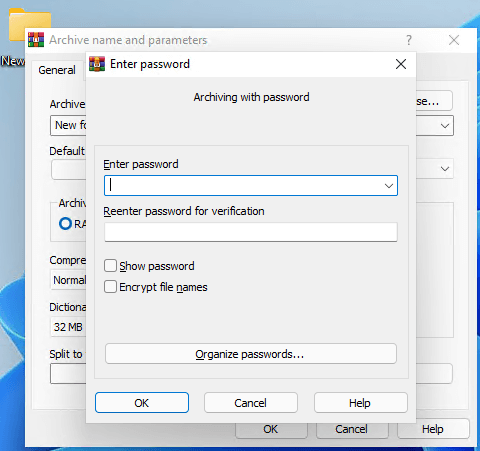
Enter a long unique password, select AES-256, and enable Encrypt file names when filenames are also sensitive.
Test the archive from another location before deleting or changing the original folder.
Encrypt the Entire USB Drive with BitLocker To Go
BitLocker To Go is the Windows whole-drive option for removable data drives. Microsoft documents support for USB flash drives, SD cards, external hard drives, and NTFS, FAT16, FAT32, or exFAT removable volumes.
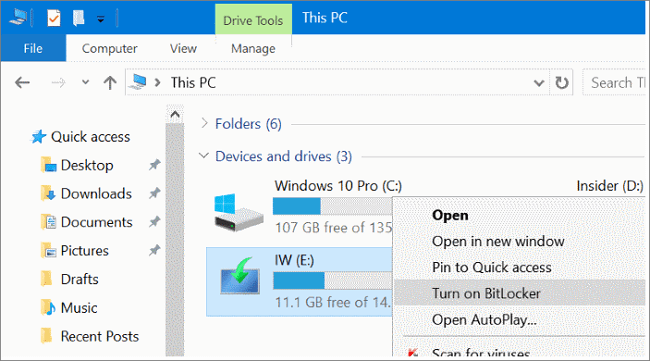
Connect the USB drive, open File Explorer, right-click the drive, and select Turn on BitLocker.
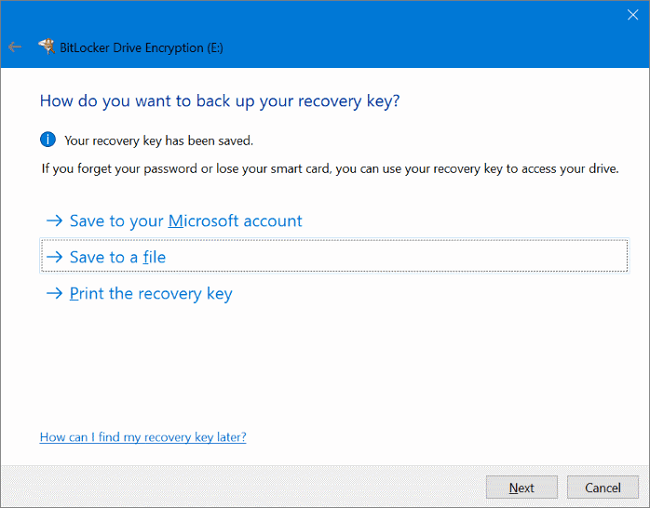
Select password unlock, create a strong password, and save the recovery key somewhere other than the USB drive.
Choose the encryption scope and compatible encryption mode requested by the wizard, then start encryption.
After completion, safely eject and reconnect the drive to verify that the password is required before any folder can be read.
Create Public and Secure Areas with GiliSoft USB Encryption
Use this method when the USB drive should keep an ordinary public area while private files are stored inside a separate password-protected secure area.
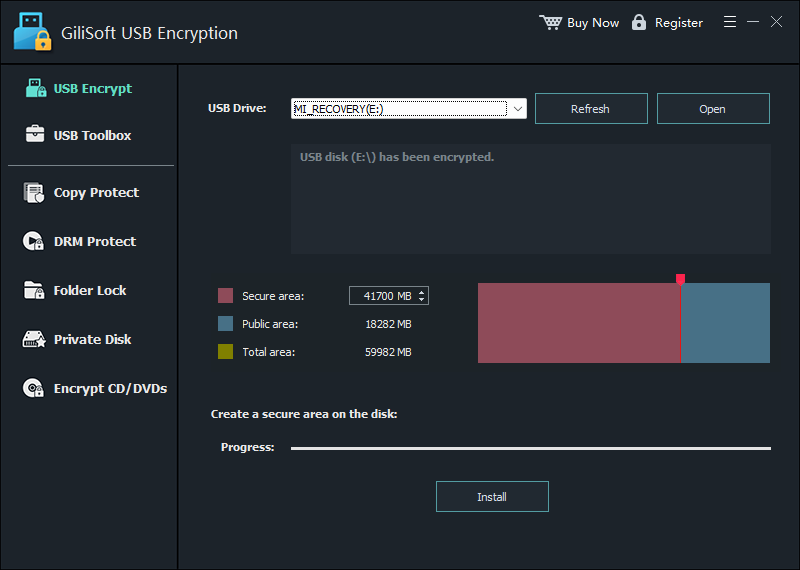
Select the USB drive and allocate space between the secure area and the public area.
Install the secure area, set its password, and move the private folder into the protected area.
Open the secure area with the password and select a virtual drive letter. Use read-only mode when files should be viewed without modification.
Close the mounted area when finished and retain any recovery or backup material separately.
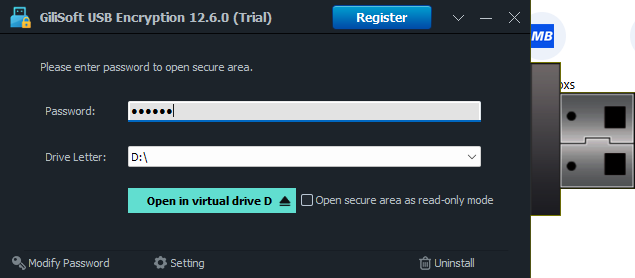
See the full GiliSoft USB Encryption guide for setup, password changes, backup, recovery, read-only access, and secure-area removal.
Build a VeraCrypt Container on the USB Drive
VeraCrypt can store a file-hosted encrypted volume on a USB drive. The container is mounted as a drive when needed and dismounted when private work is finished.
VeraCrypt is suitable for users comfortable with mounting and dismounting a vault. Its official documentation also describes a USB container and portable mode, but running portable mode can require administrative privileges and leaves operational considerations that a simple archive does not have.
Methods That Do Not Properly Lock a USB Folder
Hidden attribute alone
Hidden files can be revealed by changing File Explorer settings or using a command. Hiding is organization, not encryption.
Read-only attribute alone
Read-only may discourage casual edits, but it does not encrypt the folder or stop someone from copying its contents.
Renaming the folder or extension
A changed name does not protect file content. Anyone who recognizes the file type can restore or open it.
A password without a recovery plan
Encryption can protect the data from everyone, including its owner. Keep verified recovery information and a separate backup.
USB Folder Protection Checklist
A USB drive can fail, be lost, or be damaged. Encryption and access control do not replace a separate tested backup.
If another computer must open the folder, test that exact computer, Windows edition, filesystem, and required software first.
Do not keep the only recovery key, certificate, or password note on the same USB drive it unlocks.
Close files, dismount secure volumes, and use safe removal to reduce the risk of filesystem or container corruption.
Frequently Asked Questions
Can I lock only one folder without locking the entire USB drive?
Yes. File Lock Pro can apply a lock or hide rule to a selected folder on external storage. An encrypted archive or VeraCrypt container can also protect selected content while leaving other USB space open.
Will the locked folder open on another computer?
That depends on the method. An active File Lock Pro rule is intended for managed Windows systems where File Lock Pro is available. A 7-Zip archive, encrypted output, BitLocker drive, USB secure area, or VeraCrypt container requires its matching password and compatible opener.
Is BitLocker better than a folder lock?
It protects a different scope. BitLocker To Go is stronger for the lost-drive scenario because it encrypts the whole removable volume. A folder lock is more selective when other USB content must remain available.
Does hiding a folder protect its contents?
The normal Windows hidden attribute does not. File Lock Pro Hiding File adds product-managed access control, while encryption methods protect content cryptographically.
Can FAT32 or exFAT USB drives use BitLocker To Go?
Microsoft lists FAT16, FAT32, exFAT, and NTFS among the supported removable-drive filesystems for BitLocker To Go.
What is the safest choice for a lost USB drive?
Use complete removable-drive encryption or a secure encrypted area for every sensitive file, keep the recovery material separately, and maintain a verified backup.