Recorder preserves the event
Capture a full screen, application window, selected region, webcam, computer sound, microphone, or a combination of those sources.

Record the screen, webcam, computer sound, and microphone, then convert the completed recording for another format, device, upload destination, archive, or playback requirement in GiliSoft Screen Recorder Pro.
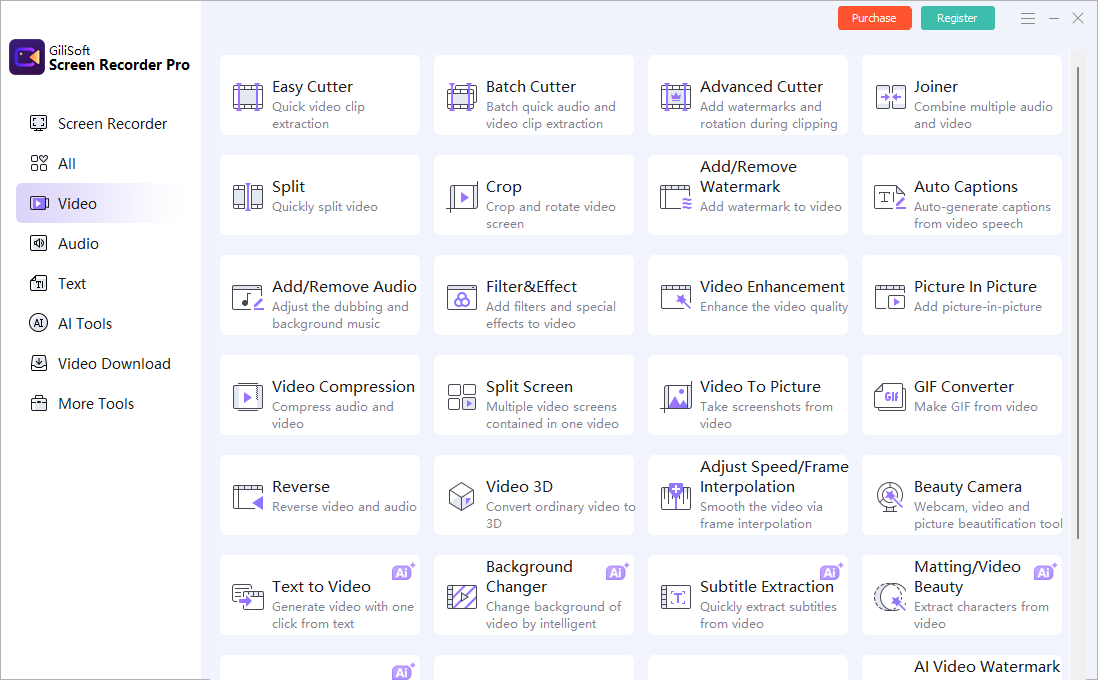 Open a completed recording in the Video workspace for conversion and preparation
Recording and conversion solve two different stages of the same job. The recorder preserves what happens on screen; the converter prepares that recording for the player, portal, device, archive, or team that will use it.
Capture a full screen, application window, selected region, webcam, computer sound, microphone, or a combination of those sources.
Change the completed recording when the destination requires another container, smaller file, different resolution, or established Windows format.
| Delivery need | Practical choice | What to check |
|---|---|---|
| Broad playback, web upload, or training portal | MP4 output | Confirm the portal's resolution, frame-rate, codec, and file-size limits. |
| An existing Windows process requires a legacy container | AVI or WMV | Test the converted file in the actual player or business application. |
| A workflow specifically requests Flash Video | FLV output | Use it only for an existing requirement; MP4 is the stronger general-purpose default. |
| The recording is too large to upload or send | Compress or convert | Remove unnecessary footage first, then balance resolution and quality against size. |
| The original already meets the requirement | Keep the source | Avoid another encode when it adds time and possible quality loss without solving a problem. |
Download GiliSoft Screen Recorder Pro to carry the job from capture into trimming, compression, format conversion, subtitles, and other preparation before the video is uploaded, archived, or sent to a viewer.
Choose the visual and audio sources that belong in the final recording. Cleaner capture decisions reduce cropping, correction, and conversion work later.
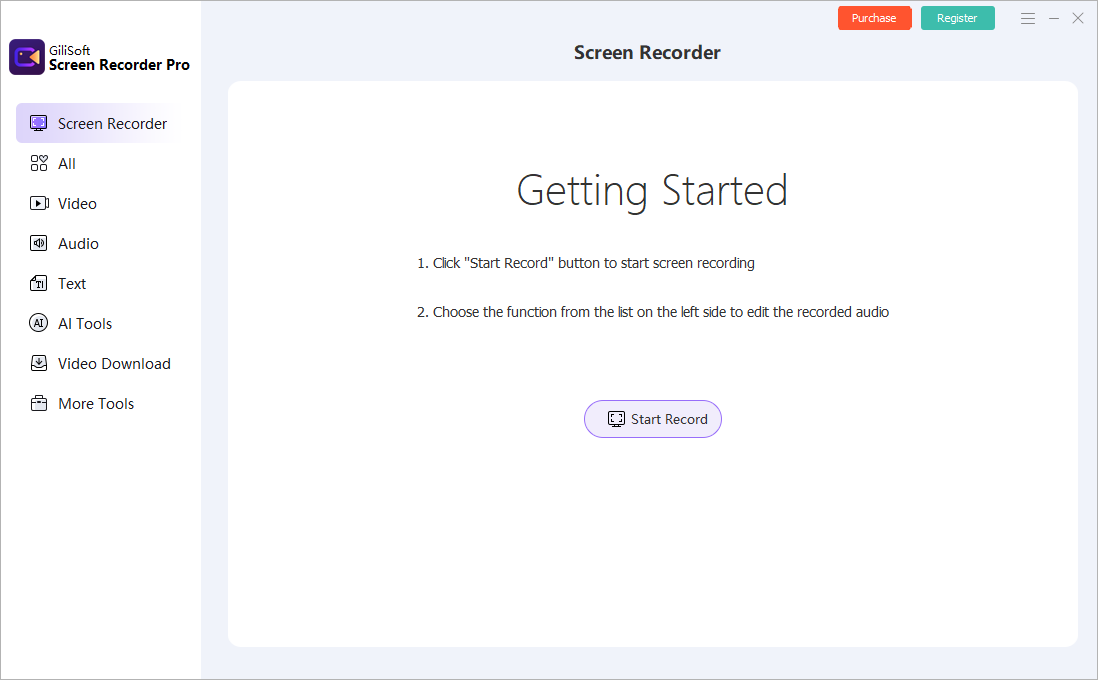 Start with the correct recording area and audio sources instead of repairing avoidable problems later
The Video workspace is more than a final export button. It contains dedicated tools for cutting, joining, cropping, compression, subtitles, audio, watermarks, picture-in-picture, and other video preparation tasks.
The Video workspace keeps conversion beside the cutting, compression, caption, audio, and finishing toolsA smaller file is useful only when text, cursor movement, interface details, and narration remain clear enough for the viewer.
Removing setup time, long pauses, and repeated actions reduces duration without lowering image quality.
Avoid exporting larger than the source. Reduce resolution only when the destination or file-size limit makes it necessary.
Preview menus, labels, code, spreadsheets, and small controls at normal playback size before accepting a lower-quality output.
Supported GPU/H.264 encoding can speed compatible export jobs. Check the finished file rather than judging quality from speed alone.
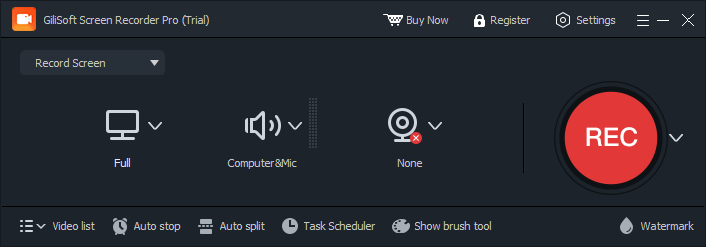 Move from recording into Video, Audio, Text, and other preparation workspaces without rebuilding the project elsewhere
Record the application window and narration, remove mistakes, then prepare an MP4 for a help center or training portal.
Capture the live workflow, crop unrelated desktop space, add labels or subtitles, and create a customer-ready copy.
Record the permitted session, cut the relevant section, and convert the shorter clip for internal review or archive.
Capture a reproducible Windows task, preserve cursor movement and voice, then convert the result for the support channel in use.
Yes. Open the completed file in the Video workspace and prepare another output for the required format, size, resolution, or destination.
MP4 is the practical default for broad playback and upload. Use AVI, WMV, or FLV when an existing process specifically requires that format.
No. Conversion cannot restore detail that was never captured. Record at a suitable resolution and verify small interface text before the full session.
Yes. Trim unnecessary footage first, then use video compression or conversion settings that balance file size with readable screen detail.
Yes. Cutting, joining, cropping, subtitles, watermarks, audio, and picture-in-picture can be handled before the delivery copy is exported.
Supported GPU/H.264 hardware encoding can shorten compatible export jobs. Always inspect the resulting file on the intended player or platform.
Choose the next page according to the work that follows capture.
Capture Windows screen activity and prepare the completed video for upload, playback, archive, training, support, or customer delivery.


Enter your email address to get our latest newsletter