
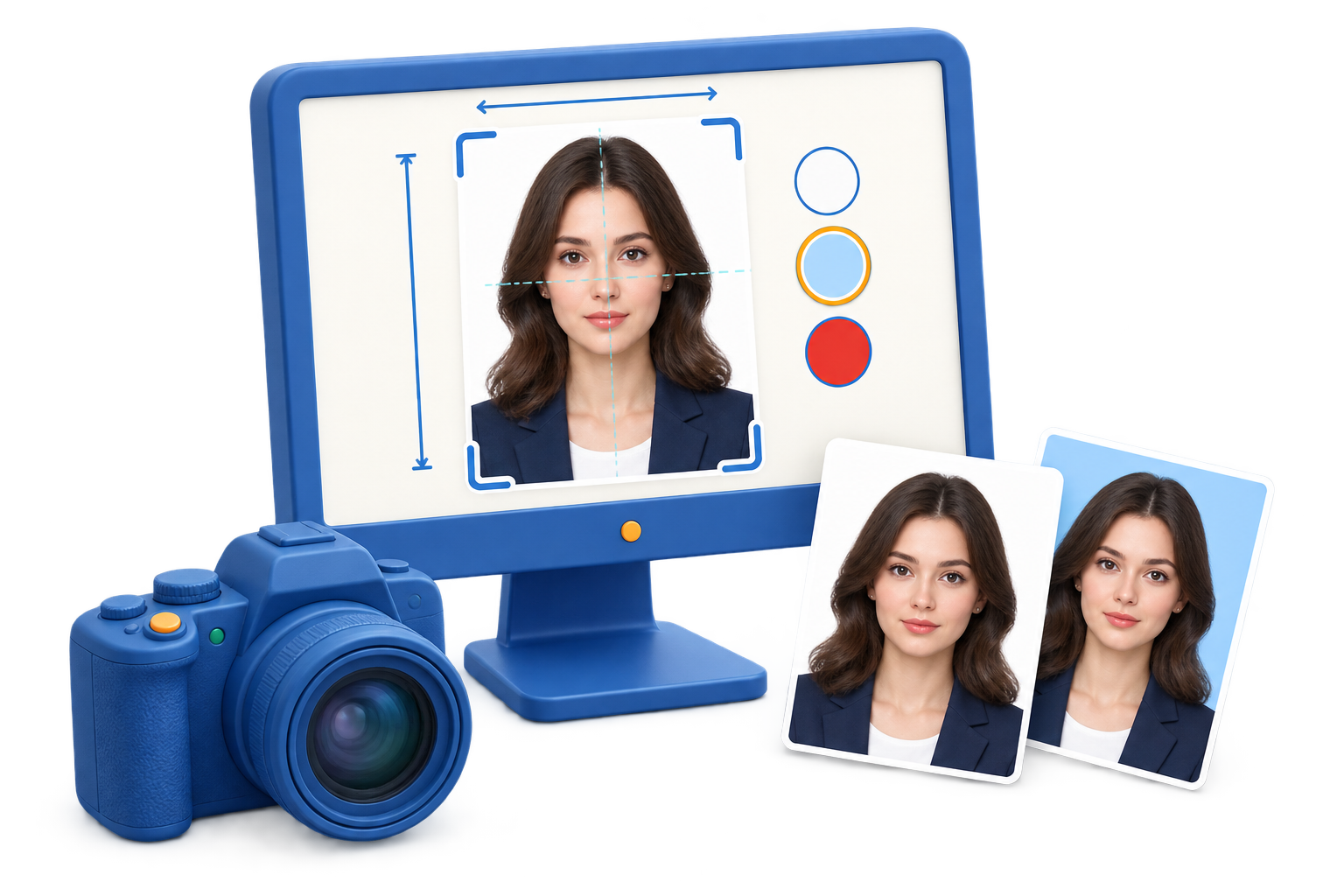
Choose the right background approach
Clean the existing background
Use this when the background is already close to the required color but contains small distractions.
Replace the background
Use a controlled plain background when the source is busy or the required color is different.
Inspect the edges
Zoom into hair, shoulders, and clothing so the result does not look cut out or artificial.
Step-by-step workflow
Use this sequence in GiliSoft SnapID and make a short test before the full recording or export.
Confirm the required background
Check the official or organizational instructions for color, texture, shadows, and acceptable headwear before editing.
Import and isolate the portrait
Open the photo in GiliSoft SnapID and identify the person, hair, shoulders, and other edges that must remain natural.
Clean or replace the background
Remove distractions or choose a plain background that fits the application. Avoid adding artificial shadows or patterns.
Review the boundary and crop
Inspect hair, ears, shoulders, and clothing at normal size, then adjust the crop so the face remains balanced.
Export the prepared photo
Save a new copy, set the requested output size, and compare the final image with the destination requirements.
Improve the result before you finish
Make the source intentional
Choose only the input you need and keep unrelated applications quiet. Clear source routing is easier to fix before recording than after export.
Keep a review checkpoint
Listen to the beginning, a representative middle section, and the ending. Confirm that the file is saved before closing the source.
Common problems and practical fixes
- Silent file: verify the source, Windows output device, app volume, and microphone permission.
- Notification sounds: close unrelated apps and use Windows Focus or Do Not Disturb.
- Uneven voice: move the microphone consistently and test input level before the full take.
- Missing ending: leave a few seconds after the last word, then stop and verify the saved file.
Record and share responsibly
Capture audio only when you have permission and follow workplace, school, platform, privacy, and copyright requirements. These tools do not bypass protected playback or replace consent.
Frequently Asked Questions
Can I use any background color?
No. The acceptable color depends on the document or organization. Check the current instructions before replacing the background.
Why do hair edges look unnatural?
The source may have low contrast or motion blur, or the replacement strength may be too aggressive. Preview the boundary and use a cleaner source when possible.
Should I change the background before cropping?
Usually isolate and clean the portrait first, then finalize the crop and dimensions so the subject remains properly framed.
Does background replacement guarantee acceptance?
No. It improves preparation, but the authority may also check lighting, expression, clothing, dimensions, and the original capture quality.
Related Windows audio guides
Continue with the workflow that matches the source or post-processing task.