
Plan the interview source
In-person customer
Use a microphone that captures the interviewer and guest clearly without excessive room sound.
Remote customer
Capture the call playback and your microphone only after checking the meeting app routing.
Research archive
Use descriptive file names and keep the original recording separate from edited clips.
Step-by-step workflow
Use this sequence in GiliSoft Audio Recorder Pro and make a short test before the full recording or export.
Confirm consent and purpose
Explain the recording purpose, storage, and intended use. Continue only when the participant has agreed.
Select both sides of the conversation
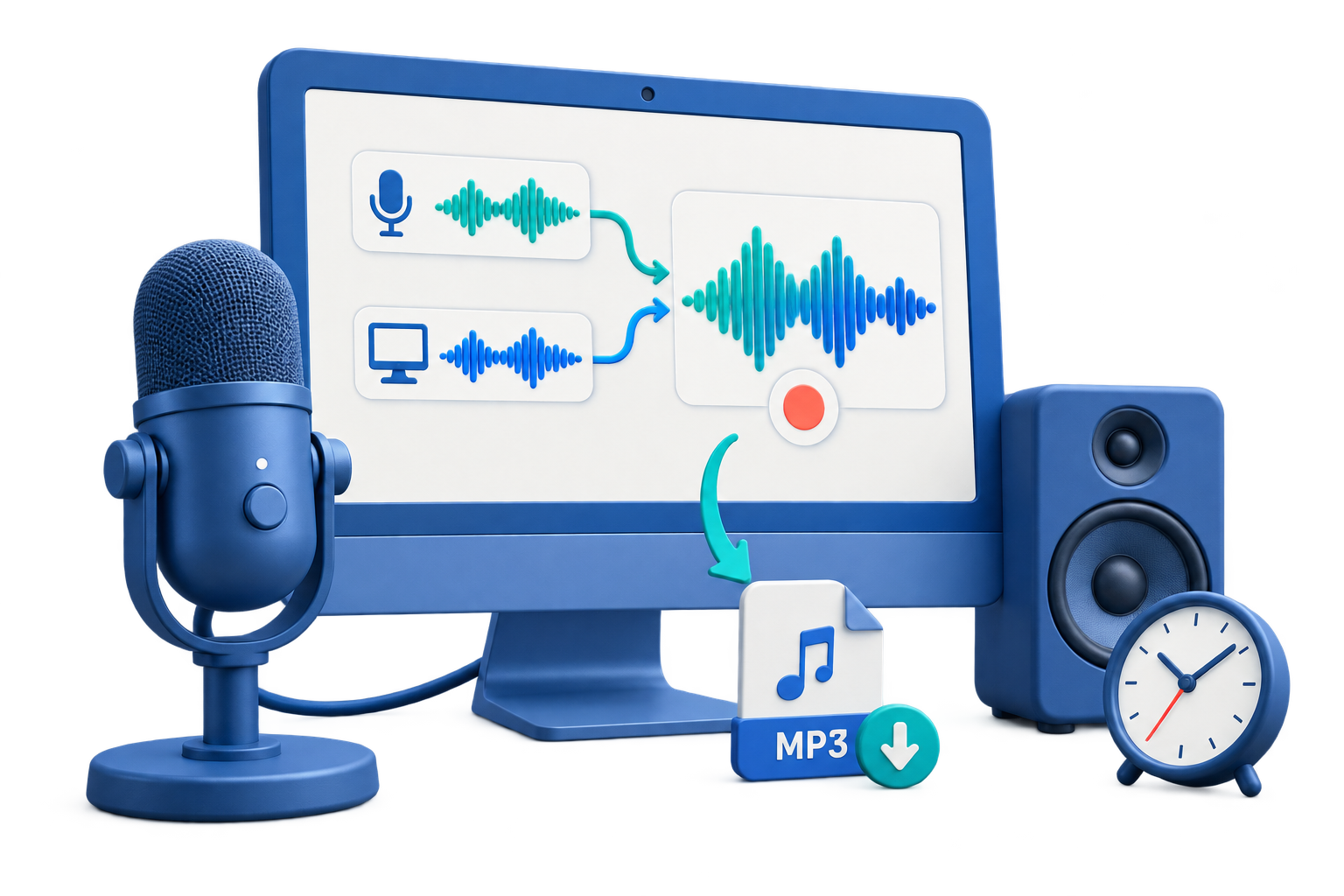
Choose microphone, computer sound, or both in GiliSoft Audio Recorder Pro according to the interview setup.
Run a two-voice test
Ask both people to speak normally and listen for echo, missing playback, or a large volume difference.
Record the conversation
Start before the introduction and avoid changing devices or moving the microphone while the interview is underway.
Archive the original
Review several sections, rename the file with the participant and date, and preserve an untouched original before editing.
Improve the result before you finish
Make the source intentional
Choose only the input you need and keep unrelated applications quiet. Clear source routing is easier to fix before recording than after export.
Keep a review checkpoint
Listen to the beginning, a representative middle section, and the ending. Confirm that the file is saved before closing the source.
Common problems and practical fixes
- Silent file: verify the source, Windows output device, app volume, and microphone permission.
- Notification sounds: close unrelated apps and use Windows Focus or Do Not Disturb.
- Uneven voice: move the microphone consistently and test input level before the full take.
- Missing ending: leave a few seconds after the last word, then stop and verify the saved file.
Record and share responsibly
Capture audio only when you have permission and follow workplace, school, platform, privacy, and copyright requirements. These tools do not bypass protected playback or replace consent.
Frequently Asked Questions
What audio source should I select?
Choose the source that matches the task: computer sound for playback, microphone for speech, or both when narration and system audio must be captured together.
Why is the recording silent?
Check the selected source, Windows output device, application volume, and microphone permissions. Make a short test recording before capturing the complete session.
How can I avoid unwanted sounds?
Close unrelated media, use headphones when monitoring a microphone, and enable Windows Focus or Do Not Disturb to reduce notification distractions.
Which format is suitable for sharing?
MP3 is convenient for everyday sharing and storage. WAV is better when you want an uncompressed working file for later editing.
Related Windows audio guides
Continue with the workflow that matches the source or post-processing task.